


Basketball Conditioning Workouts That Win Games

The fourth quarter tells the truth. When legs get heavy, shots come up short, closeouts get slower, and the player who looked skilled in the first 10 minutes suddenly cannot keep the same pace. That is why basketball conditioning workouts matter. Good conditioning is not just about surviving sprints. It is about being able to defend, cut, recover, finish, and think clearly when the game is still on the line.
Too many players train conditioning like track athletes and then wonder why it does not fully carry over to the court. Basketball is repeated acceleration, deceleration, change of direction, jumping, contact, and quick recovery. A strong conditioning plan has to reflect that. If your workouts do not look and feel like basketball, they will only take you part of the way.
What basketball conditioning workouts should actually train
The best basketball conditioning workouts build three things at once - engine, movement quality, and mental toughness. Your engine matters because basketball is nonstop effort in short bursts. Movement quality matters because tired athletes who cannot control their feet lose advantages fast. Mental toughness matters because fatigue makes discipline harder, and games are often decided by who still executes under pressure.
This is where many players miss the mark. Running long distances may help general fitness, but it does not train the start-stop rhythm of basketball very well. On the other hand, doing only hard sprints without structure can leave players exhausted without making them more efficient movers. The sweet spot is controlled intensity with basketball-specific patterns.
For younger athletes, that means shorter intervals, cleaner technique, and more attention to form than punishment. For middle school and high school players, conditioning can get more demanding, but it still needs purpose. For advanced athletes, the standard rises again. They need workouts that challenge recovery, explosiveness, and consistency at game speed, not just effort for effort’s sake.
Basketball conditioning workouts need game-speed movement
A real conditioning session should include forward sprinting, lateral slides, backpedaling, hip turns, closeouts, and explosive transitions. Those are the actions that show up every possession. If a player can run hard in a straight line but cannot change direction cleanly after 20 minutes of play, conditioning is incomplete.
A simple example is the difference between running suicides mindlessly and running them with basketball posture, controlled footwork, and consistent touch points. The second version trains more than lungs. It trains discipline. The same applies to defensive slide intervals, half-court retreat-and-recover drills, and transition finish sequences where players sprint, gather, and score under fatigue.
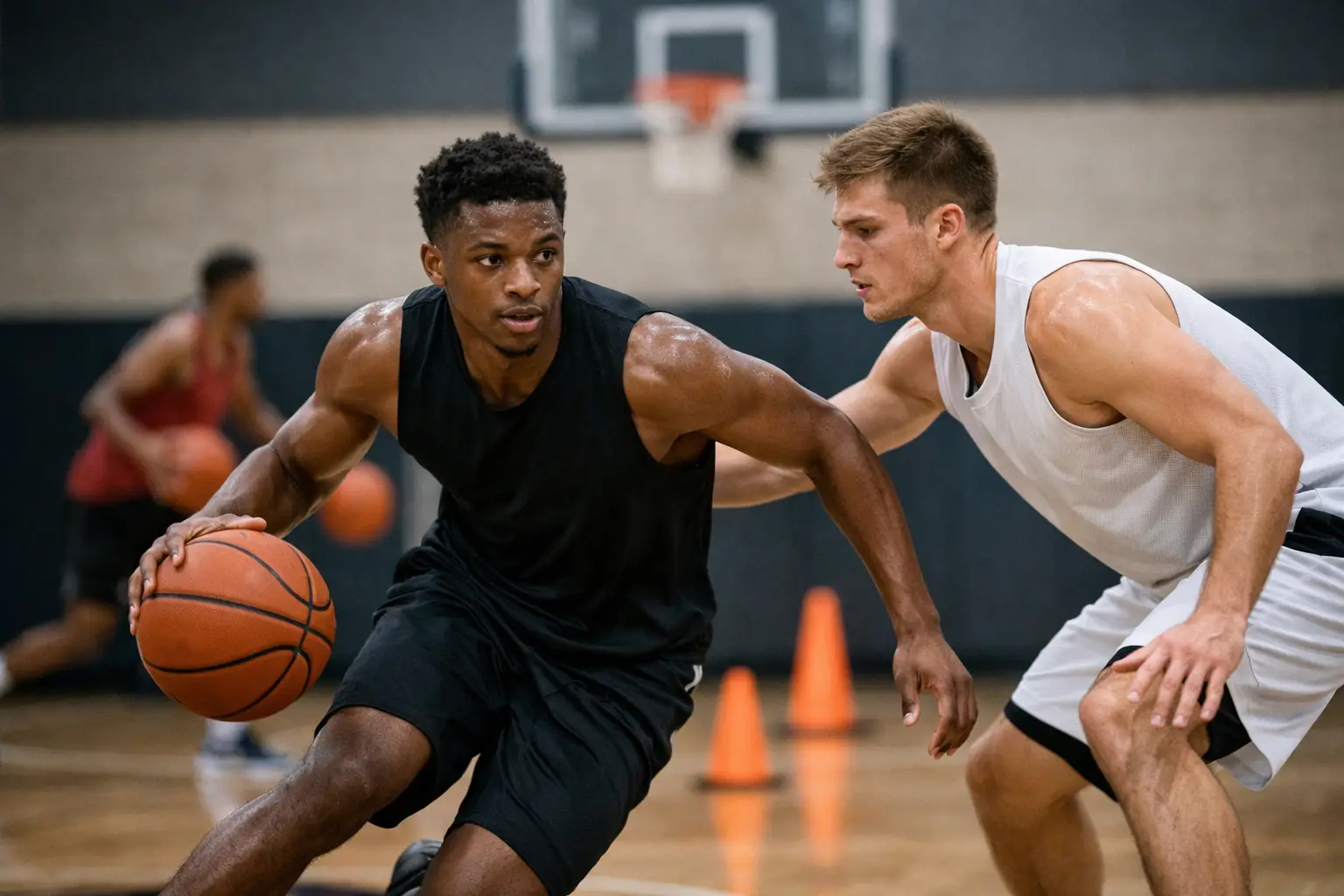
This is also why ball-in-hand conditioning can be valuable. Not every conditioning segment needs a basketball, but some should. Dribbling full court at changing speeds, attacking cones after a sprint, or making reads after a high-intensity burst teaches players to stay sharp when tired. That is the kind of shape that helps in real games.
The balance between stamina and explosiveness
Players do not need to choose between endurance and power. They need both, but in the right order and amount. Basketball rewards repeated explosiveness more than slow, steady pacing. A player has to jump, stop, slide, burst, and do it again before they are fully recovered.
That means conditioning should not turn athletes into slower versions of themselves. If a workout is so volume-heavy that it kills speed, that is a problem. It is better to keep high-quality intervals, rest with purpose, and maintain sharp movement than to pile on extra reps that look tough but lower performance.
For guards, this often means more emphasis on repeat bursts, pace changes, and quick recovery between high-output efforts. For wings and forwards, there may be more contact-based movement, lane-to-lane running, and rebounding actions under fatigue. For post players, short explosive efforts, sealing, rim runs, and repeated power movements matter more than nonstop perimeter-style conditioning. It depends on age, level, and role.
How to structure basketball conditioning workouts each week
The strongest weekly plans do not max out conditioning every day. Players improve when hard work is paired with recovery and skill development. Conditioning should support basketball progress, not crush it.
A younger beginner may only need two focused conditioning sessions each week, especially if practices and games already add a lot of physical work. A serious middle school or high school player may benefit from two to three structured sessions, depending on the season. College and advanced athletes may train more often, but the intensity has to be managed with precision.
Offseason conditioning can be heavier because there is more room to build capacity. Preseason work should shift closer to game rhythm, with more reactive movement and basketball-specific intervals. In-season training usually needs a lighter touch. The goal is to stay sharp and conditioned without draining the legs needed for games and practices.
A practical session blueprint
A strong session usually starts with dynamic movement prep. That can include skips, shuffles, hip mobility, activation, and short accelerations. This gets the body ready to move well before intensity climbs.
The main conditioning block should then target one clear outcome. Maybe it is repeated sprint ability. Maybe it is defensive recovery. Maybe it is full-court transition effort. Pick the target and train it with intent.
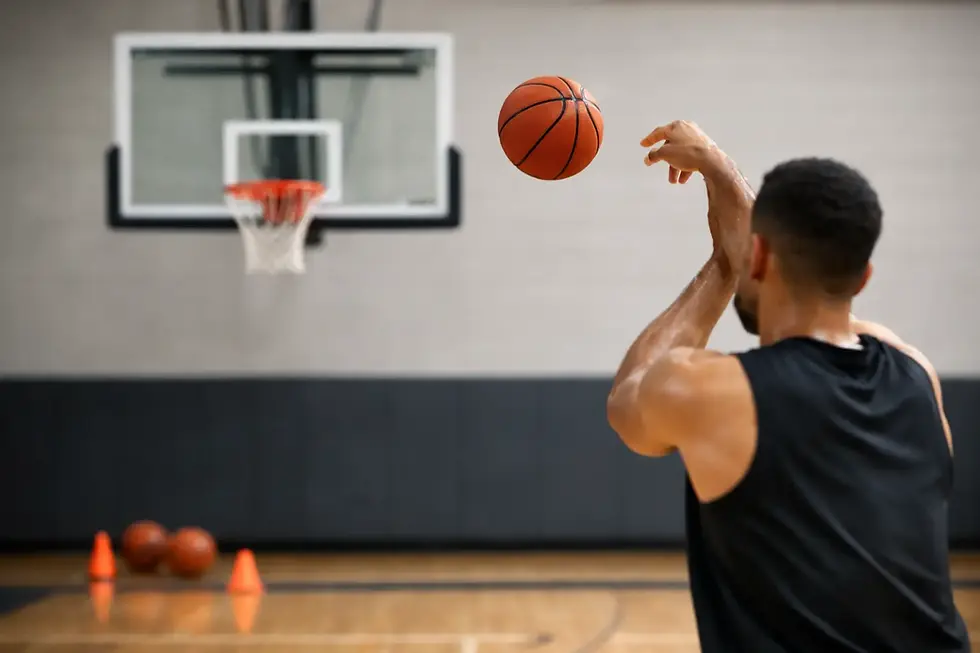
After that, add a basketball-specific finisher if it makes sense. This could be full-court dribble attacks, closeout-to-rebound sequences, or sprint-to-shoot drills where players must make shots while tired. That final piece bridges conditioning and execution, which is where real improvement shows up.
Common mistakes that hold players back
One mistake is treating hard work like smart work. Plenty of athletes leave the gym exhausted but not better conditioned for basketball. If the movement patterns are sloppy, rest periods are random, and intensity is all over the place, the workout becomes noise.
Another mistake is ignoring recovery. Sleep, hydration, and basic nutrition affect conditioning more than many players want to admit. A tired, under-fueled athlete will not adapt the same way as one who is recovering well. That does not mean every player needs a perfect meal plan. It means discipline off the court helps results on the court.
A third mistake is using the same workout for every age and skill level. A seven-year-old does not need the same training stress as a varsity starter. An adult rec player may need a different approach than a college athlete preparing for high-level competition. Good programming meets the player where they are, then pushes them forward from there.
What parents and serious players should look for
If you are a parent, conditioning should build confidence, not fear. Young athletes need structure, coaching, and progression. The goal is not to break them down. The goal is to help them move better, compete harder, and enjoy seeing real growth.
If you are a serious player, your conditioning should be measurable. You should know whether your recovery is improving, whether your game-speed movement is cleaner, and whether you can maintain execution deeper into workouts and games. Guesswork is not enough when performance matters.
That is where structured development changes everything. At King Of Bounce Training, the standard is progression. Players need a plan that fits their age, level, and goals, whether they are just starting out or chasing the next level. The best days are in front of you, but only if your training matches the demands of the game.
The best basketball conditioning workouts feel like basketball
That is the big test. When your conditioning work improves your transition defense, your second jump, your late-game handle, your closeouts, and your focus under pressure, it is doing its job. When it just leaves you tired, it is time to adjust.
Basketball conditioning workouts should make you more dangerous, not just more fatigued. Train with purpose, train at a level that matches your stage, and keep building the habits that hold up when the pace gets real. The player who can still move, think, and compete late is usually the player everybody notices when the game is on the line.

Comments